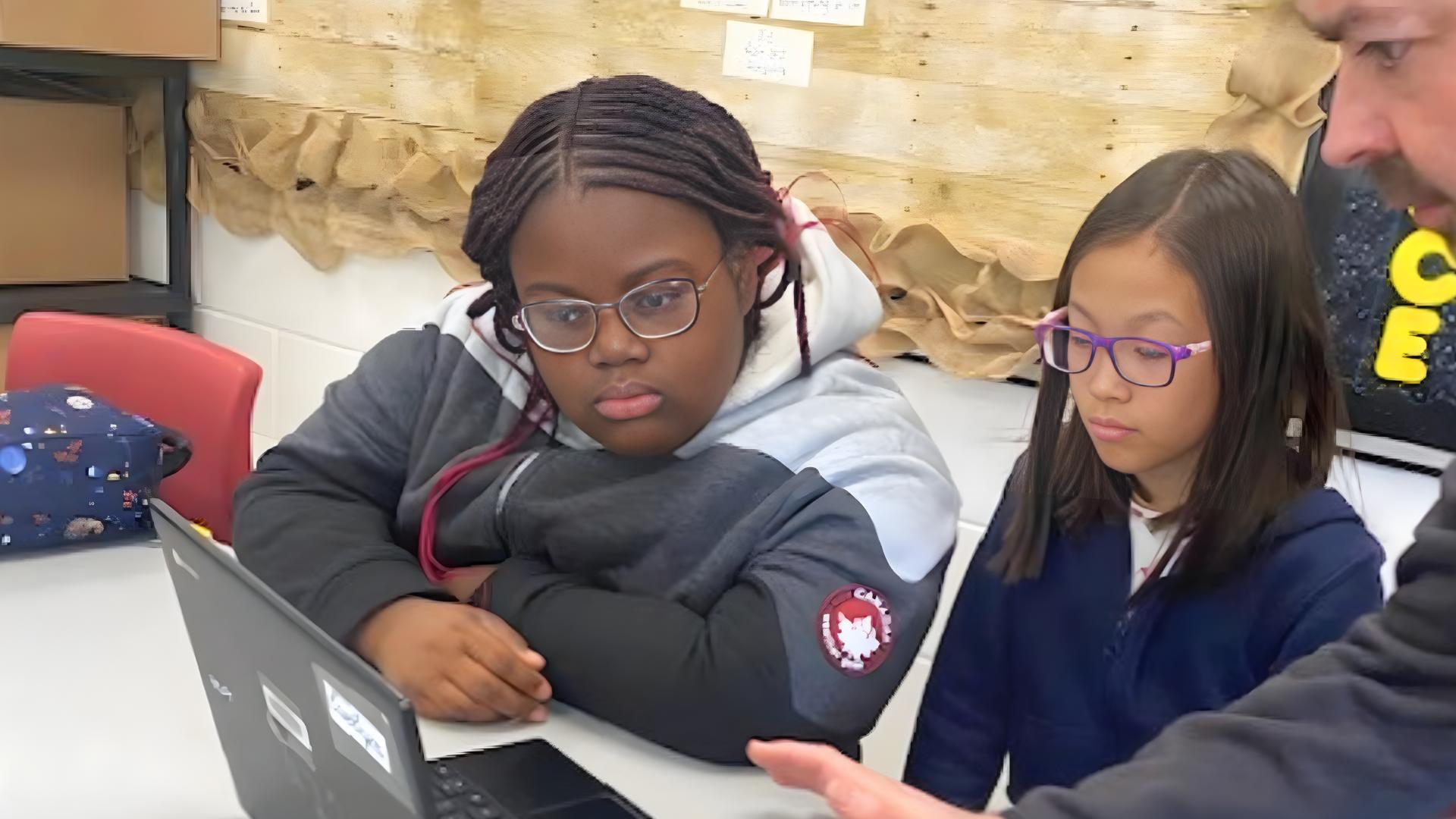
Can AI Survive Space?
Students in the Ottawa Catholic School Board’s Program for Gifted Learners (PGL) reached new heights at St. Brother André School. Guided by teacher Deborah Quail-Blier, they partnered with Ottawa-based technology company MindBridge AI and its Chief Technology Officer, Robin Grosset, to explore the fascinating world of artificial intelligence. Together, they learned how to build, train, and test AI systems — and then sent their experiment to the edge of space.
Their mission was ambitious: to launch an AI experiment aboard both a NASA rocket and a high-altitude research balloon through the globally recognized Cubes in Space program. The goal was to study how cosmic radiation could affect AI performance, testing student-designed technology beyond Earth’s atmosphere.
Working alongside Robin Grosset, a leading expert in artificial intelligence, students developed and tested multiple AI models before selecting the top performer. The chosen model was transferred to computer memory chips — twenty-four for each launch platform. Each compact chip, small enough to fit inside a four-centimetre cube, met NASA’s strict specifications for the program.
I’ve spent my career exploring how science and engineering shape the world, Robin said. I wanted to give students the kind of hands-on, ‘a-ha!’ moments that spark curiosity and confidence. This project does exactly that. It’s technically challenging and a lot of fun.
Building on a Legacy of Innovation
This was not the first time PGL students extended their learning beyond Earth. In an earlier Cubes in Space project, more than 150 students collaborated on two successful experiments that were launched into space. Their latest work with AI built on that legacy of innovation, combining scientific curiosity with real-world application.
Explaining advanced AI principles to students was no small feat, but Robin made it accessible and exciting:
It helps to use analogies, he explained. When we studied reinforcement learning, we compared it to training a dog. When the AI improves, it’s like rewarding the dog for good behaviour. After covering the theory, we always move to hands-on learning. Experimenting allows students to see how AI learns in real time.
Learning, Wonder, and Discovery Together
Some of the most memorable moments of the project came from shared discovery.
Sometimes I’m learning right alongside the students, Robin said. They ask questions that make me stop and think. Because this is a genuine experiment — sending AI into space — we’re all exploring the unknown together. Watching students hypothesize about cosmic radiation and its possible effects on technology is incredible.
The project culminated in presentations at FlightFest at the Canada Aviation and Space Museum, where students shared their findings with peers, educators, and technology experts. The event celebrated creativity, collaboration, and the spirit of discovery.
Deep Learning in Action
The AI space experiment reflected the OCSB’s Deep Learning approach, where students did more than memorize facts — they applied their knowledge to real-world challenges while building global competencies in critical thinking, creativity, collaboration, and citizenship.
It also embodied the core values of the Program for Gifted Learners: Be Community. Be Innovative.
Robin encouraged professionals in science and technology to collaborate with schools in similar ways. “What drew me to being a scientist and engineer was a sense of wonder,” he said. “I try to model lifelong learning and remind students that not knowing everything is okay. We figure it out together. It’s all about sparking curiosity and nurturing future innovators.”
The Future Was in Good Hands
Through hands-on, inquiry-based learning, PGL students developed technical expertise, creativity, and resilience. They discovered that learning did not stop at the classroom door — or even at the edge of Earth’s atmosphere.
Their journey into space was a testament to curiosity, teamwork, and innovation. It reminded us that when education was guided by imagination and purpose, the possibilities were truly limitless.
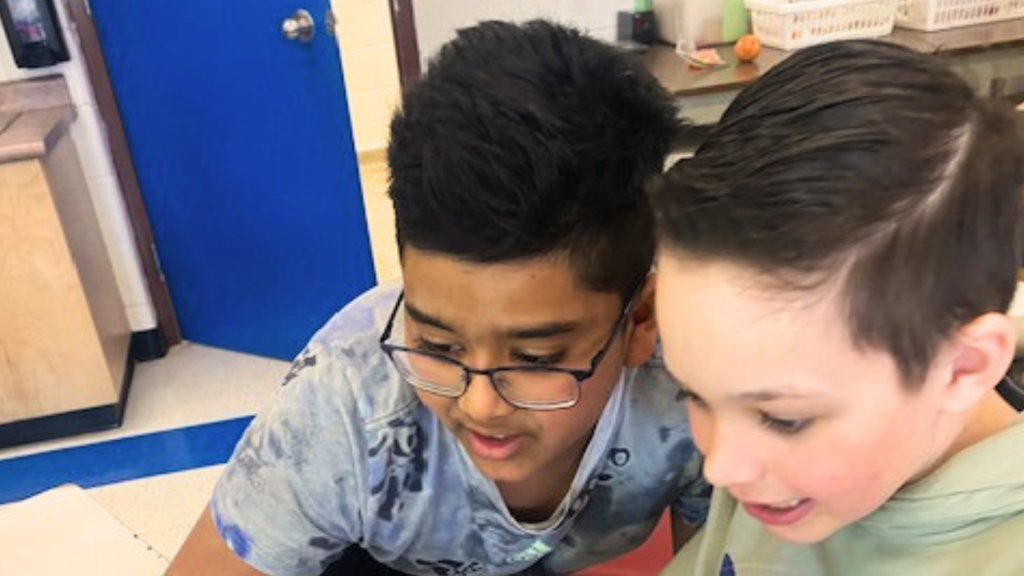 Students explore artificial intelligence through hands-on experimentation,
preparing models for launch into space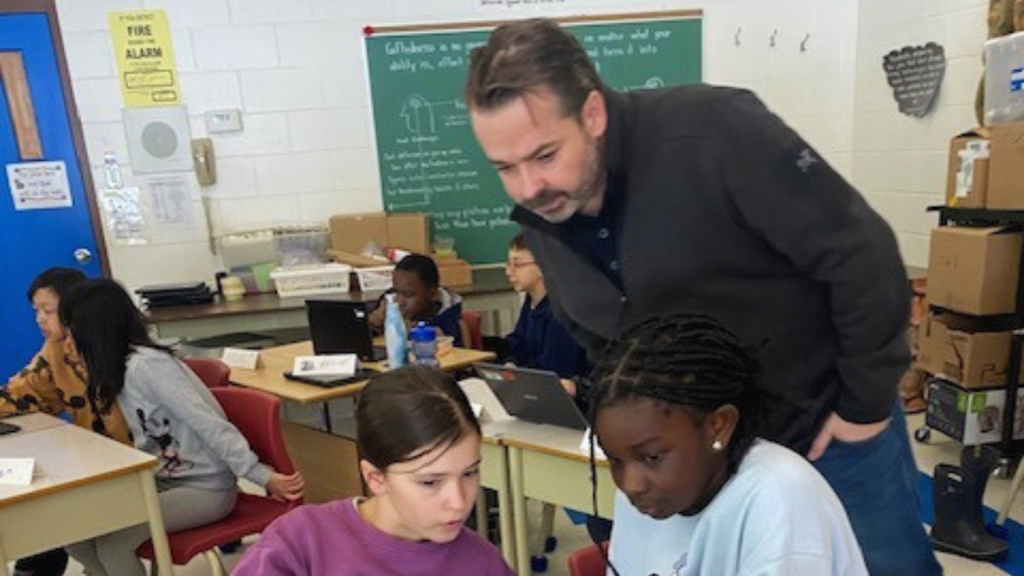 Curiosity and collaboration take flight as learners work with educators and
tech experts to test AI beyond the classroom
The Ottawa Catholic School Board received the Award of Distinction for its Strategic Approach to Integrating AI in Education at the
2025 BRAVO Awards, presented by the Canadian Association of Communicators in Education (CACE).