Innovation Meets the Classroom
At the Ottawa Catholic School Board, writing was more than a skill; it was a process of discovery. Across classrooms, students learned to express themselves with purpose and confidence, supported by innovative tools that placed them in charge of their own learning.
Two OCSB schools, St. Francis Xavier High School and Corpus Christi Elementary School, welcomed the Brisk Teaching team for an inside look at how students were using Brisk Boost, an AI-powered writing assistant designed specifically for learners.
What they found was not simply technology in action; it was Deep Learning in motion.
Writing That Pushed Thinking at St. Francis Xavier
In Ashley Scarcello’s English class at St. Francis Xavier, students worked on persuasive writing assignments with support from resource teacher Tara Potter. They used Brisk Boost’s Writing Coach feature to reflect, revise, and strengthen their arguments.
The AI did not hand them answers. Instead, it posed thoughtful questions, encouraged them to think more deeply, and offered suggestions they could choose to accept or ignore. One student described it best:
It’s not a shortcut; it’s more like having a tutor beside you.
Critical Thinkers at Corpus Christi
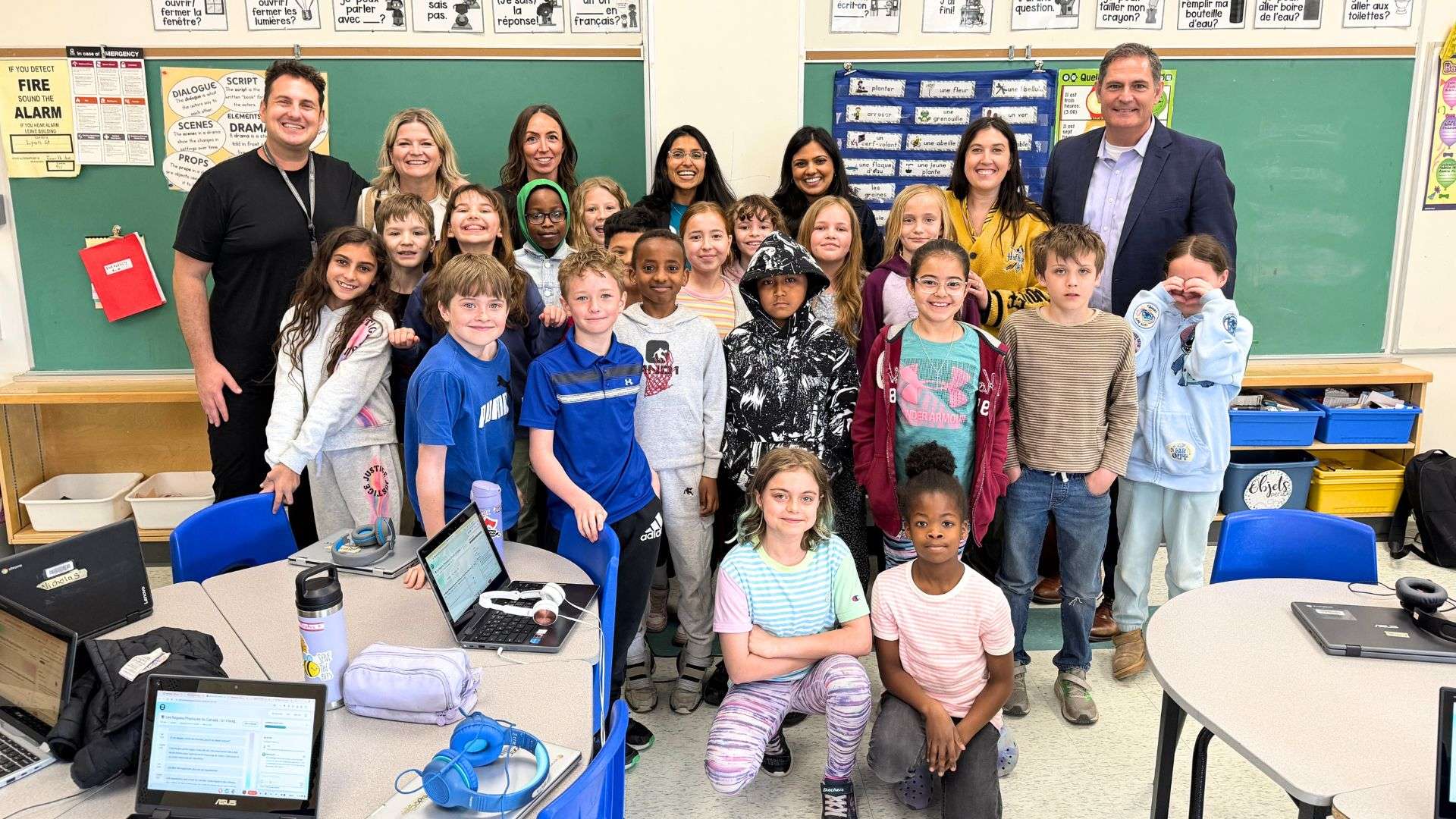
At Corpus Christi, Daphne Capaldi’s students approached Brisk Boost with curiosity and openness. The classroom buzzed with conversation about their writing, their process, and the tool itself.
Students offered feedback directly to the Brisk team on what worked well, what could be improved, and how the experience helped them think more critically about their writing. They were not just learning with AI; they were helping to shape it. That kind of student agency and reflection was at the core of Deep Learning at the OCSB.
Collaboration That Centred Students
Throughout both visits, members of the OCSB’s Learning Technology Department worked alongside classroom educators and Brisk staff to observe how students interacted with the tool. What stood out was not just its functionality, but how naturally students took ownership of their work.
This was not technology doing the thinking. It was technology prompting students to think harder, reflect more deeply, and remain in control of their learning.
AI That Supported, Not Replaced
The Brisk Boost pilot demonstrated how AI could enhance differentiation, accessibility, and Deep Learning without ever replacing the student voice at its centre. From high school to elementary, students discovered that AI was not a crutch. It was a partner that helped them write stronger, think bigger, and grow into more confident, independent learners.
One Idea at a Time
At the OCSB, technology was used to empower students, not to do the work for them. Tools such as Brisk Boost brought that belief to life every day.
When students led with their ideas and used tools that encouraged curiosity, reflection, and ownership, their learning deepened, their confidence grew, and their writing shone — one student, one sentence, and one bold idea at a time.
 Educators and students collaborate in a dynamic learning environment where innovation supports confidence and independence
 OCSB staff and educators collaborate during the event, exploring innovative tools and strategies to support student-centred learning
 Classrooms come alive with conversation and creativity as students interact with educators
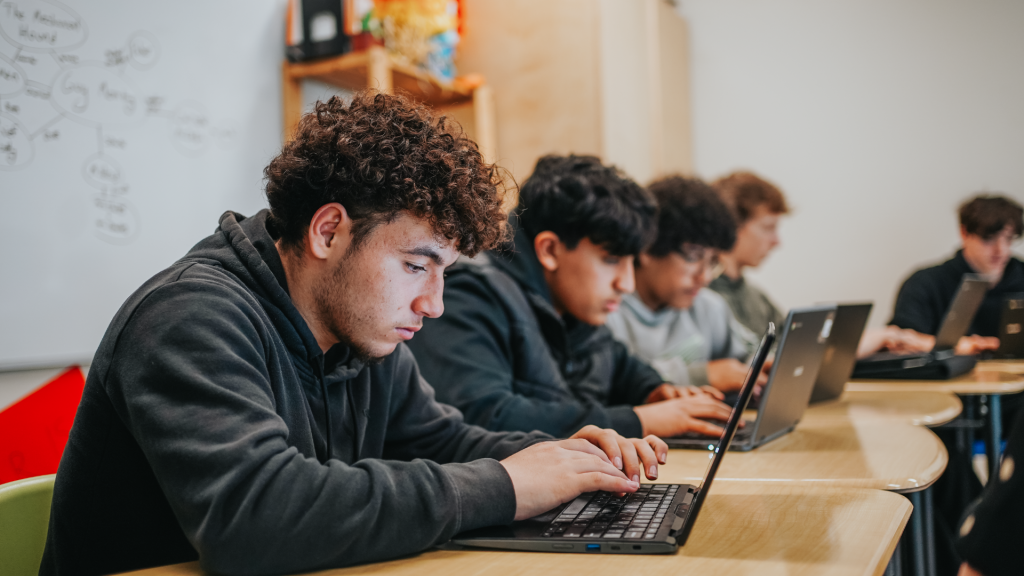 Students engage with writing tools that support reflection, revision, and deeper thinking

The Ottawa Catholic School Board received the Award of Distinction for its Strategic Approach to Integrating AI in Education at the 2025 BRAVO Awards, presented by the Canadian Association of Communicators in Education (CACE).