Some of the most meaningful learning happened when students applied their knowledge in real-world settings, working together, solving problems, and making a difference. At Sacred Heart High School, students did exactly that, building real businesses with one shared goal: giving back to their community.
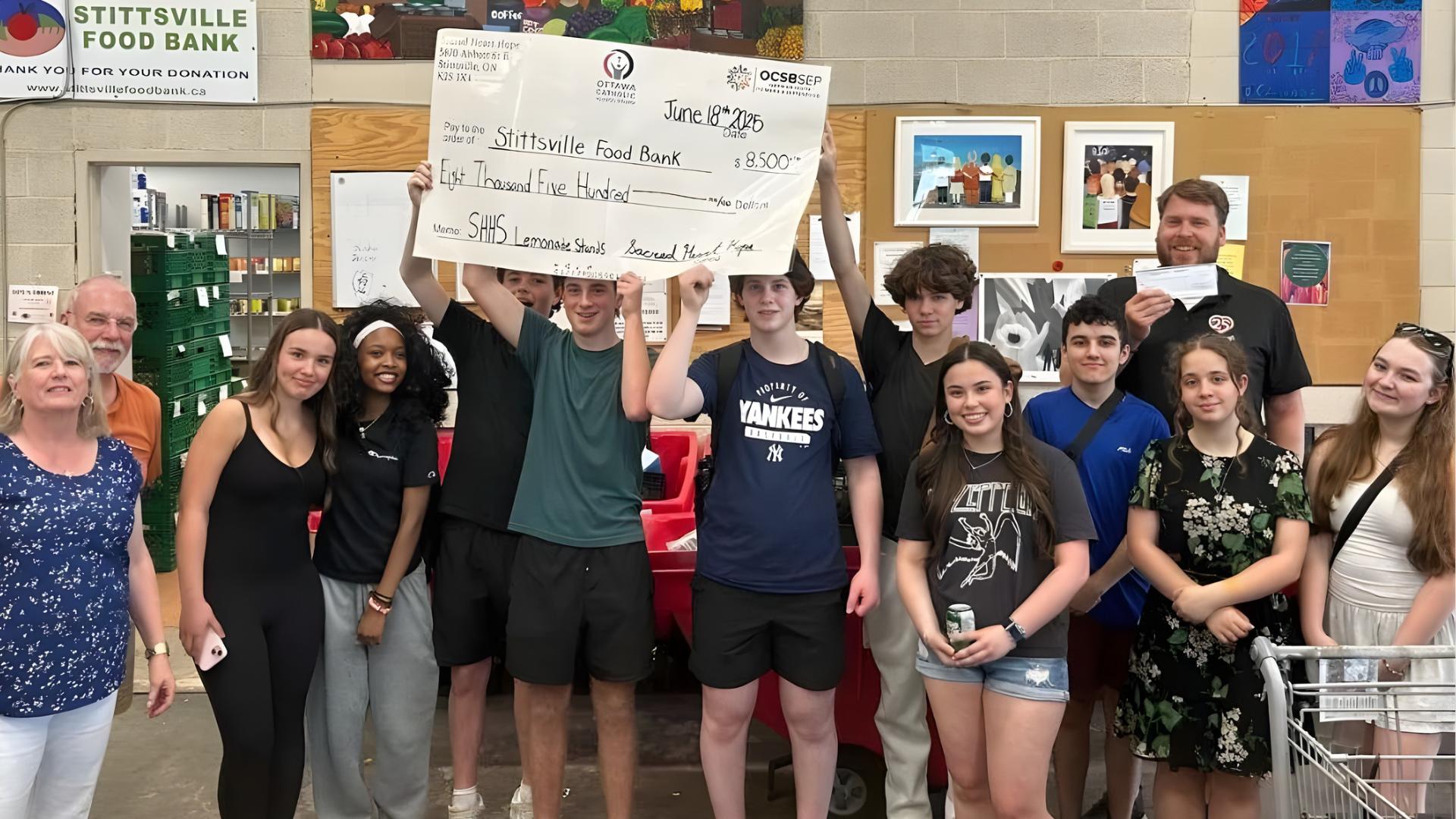
A group of Grade 10 Business students proudly walked to the Stittsville Food Bank to deliver a donation of $8,500, the culmination of months of teamwork, innovation, and generosity. Beyond the cheque they carried, they brought a deep sense of pride in what they had built together.
The donation represented the success of the Sacred Heart Hope Initiative, a student-led business project that ran as part of the Ottawa Catholic School Board’s Social Entrepreneurship Program (SEP). More than 170 students across six Grade 10 classes took part, discovering what it truly meant to launch a business that did not just sell but gave back.
The Lemonade Stand Project with a Twist
Affectionately nicknamed “The Lemonade Stand Project,” this hands-on initiative saw students form small business teams, brainstorm product ideas, create marketing strategies, and sell food and drink items during lunch hours throughout the school year. From hot chocolate and baked goods to pizza, hot dogs, and cold drinks, creativity and collaboration were at the heart of every venture.
The twist was that every dollar of profit went to charity.
As part of SEP, students chose to focus on the United Nations Sustainable Development Goal #2: Zero Hunger, which aims to create a world free from hunger. While studying the global challenge of food insecurity, students connected it to their own community, learning that hunger affected families close to home as well. Through this lens, they linked business decisions to social justice, understanding that success could also mean service.
By the end of the project, the students had raised $8,500 to support local families through the Stittsville Food Bank. Their efforts came at a critical time, when community need remained high but donations often slowed.
Real-World Learning with Real-World Tools
This initiative went far beyond a typical school fundraiser. Students gained practical business experience using modern tools and technologies. They built online storefronts through Shopify, processed transactions with point-of-sale systems, and accepted debit and credit payments – skills that mirrored real-world commerce.
Entrepreneurial pitch sessions, inspired by CBC’s Dragons’ Den, gave students the chance to present their ideas to a panel of “Dragons” who offered feedback and encouragement. Many teams also managed budgeting, product sourcing, packaging, and marketing, learning to think critically at every stage.
Learning That Lasted Beyond the Classroom
The Social Entrepreneurship Program at Sacred Heart High School exemplified Deep Learning in action, helping students develop global competencies that extended far beyond business.
- Citizenship: Students addressed real-world issues through purposeful community action.
- Character: They demonstrated perseverance, teamwork, and empathy in every phase of the project.
- Communication: They refined their ability to pitch ideas, market products, and collaborate effectively.
- Critical Thinking: They analyzed data, solved logistical challenges, and adjusted strategies as needed.
- Collaboration: Teams divided responsibilities, supported one another, and achieved shared goals.
- Creativity: Students expressed innovation through branding, design, and problem-solving.
By the end of the project, students had more than financial results to show. They had built something meaningful. Their work fed both minds and hearts, proving that education could be a powerful force for social change.
A Blueprint for Change
The Sacred Heart Hope Initiative stood as a model for how schools could blend entrepreneurship, empathy, and education. These students did not just learn how to run a business. They learned how to build community, foster compassion, and take action for the greater good.
While the walk to deliver their donation was short, their journey of learning, leadership, and impact would continue to shape how they saw the world and their place in it.
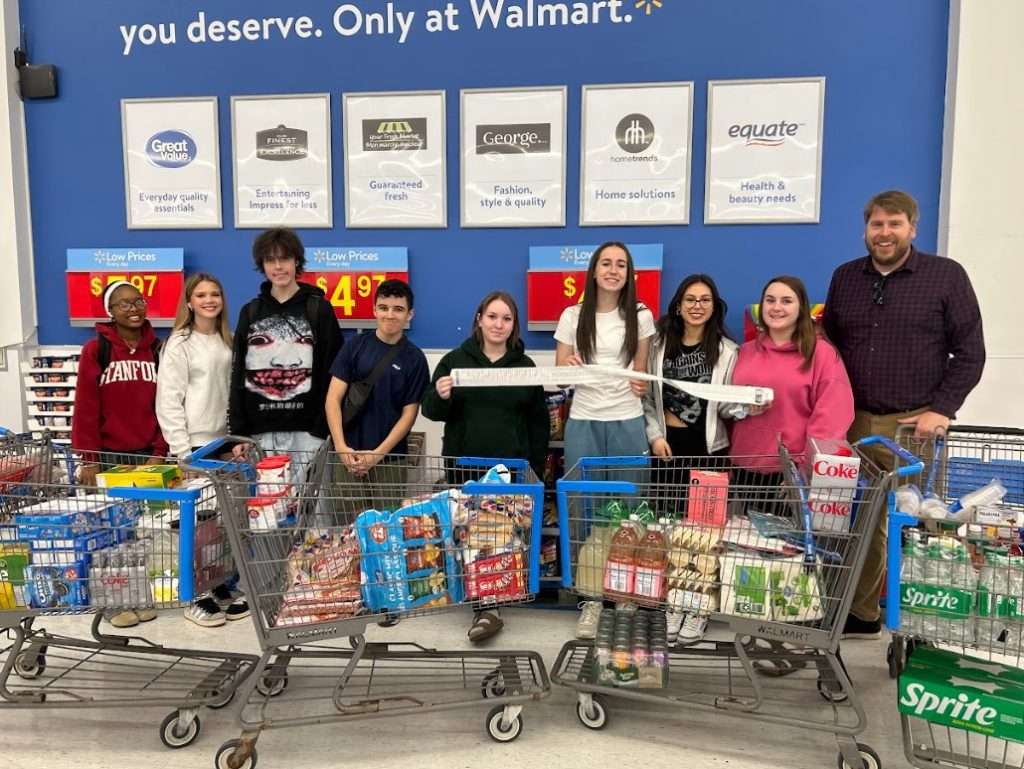 Sacred Heart students preparing to donate to Stittsville Food Bank
 Students wearing their hot dog costumes by their food stand